Blissmors
Improving the custom ordering experience for a small bakery
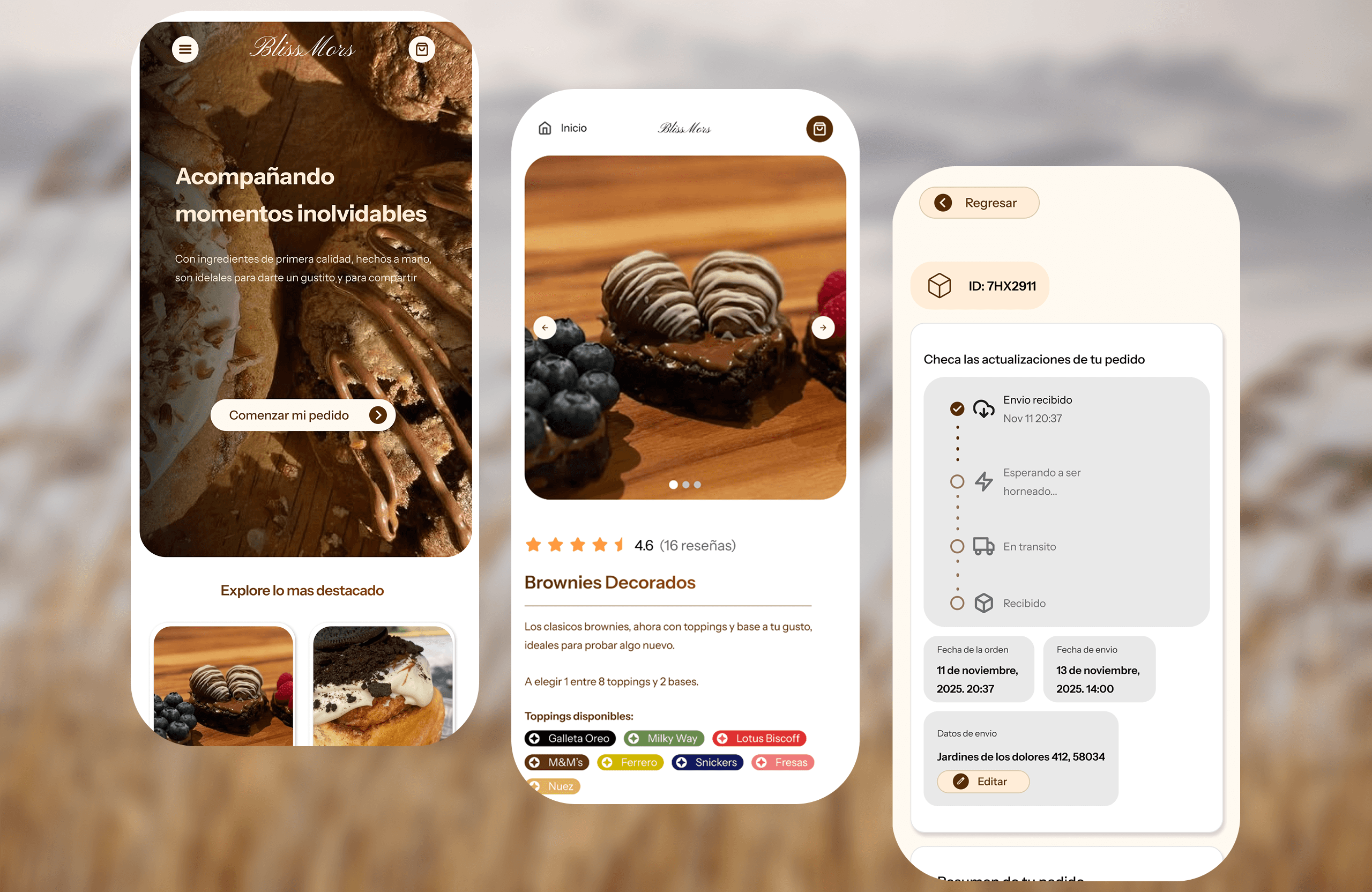
Summary
Small bakeries often rely on direct messages to manage custom orders, which can lead to confusion, mistakes, and missed details.
This case study explores how a structured, mobile-first ordering flow can help customers place custom bakery orders with confidence, while giving the business a clearer and more organized way to manage incoming requests.
Role
Tools
Figma
Duration
July-November
Introduction
Understanding the problem
Pain:
A small bakery without a physical store relies on Instagram and text messages to receive orders, forcing customers to manually describe their requests, which creates friction and confusion.
Consequence:
Customers lose interest or cancel orders, while the business faces errors, missed details, and inefficient order management.
Need:
A structured and intuitive ordering experience that allows customers to easily place custom orders while providing the business with clear and reliable information.
How might we?
Ideating solutions
Structured customization options
Instead of free-text messages, customers select from predefined options with limited flexibility where necessary.
This maintains personalization while keeping orders clear and consistent.
Why:
Structured inputs minimize errors while still allowing custom requests.
Order summary and confirmation
Before submitting the order, users review a clear summary of their selections, including delivery date and customization details.
Why:
This builds trust and reduces misunderstandings between customers and the bakery.
Centralized order overview for the business
Orders are presented in a single, organized view that allows the bakery to easily review, confirm, and track requests.
Why:
Centralizing orders improves operational efficiency and reduces the risk of missed or forgotten requests.
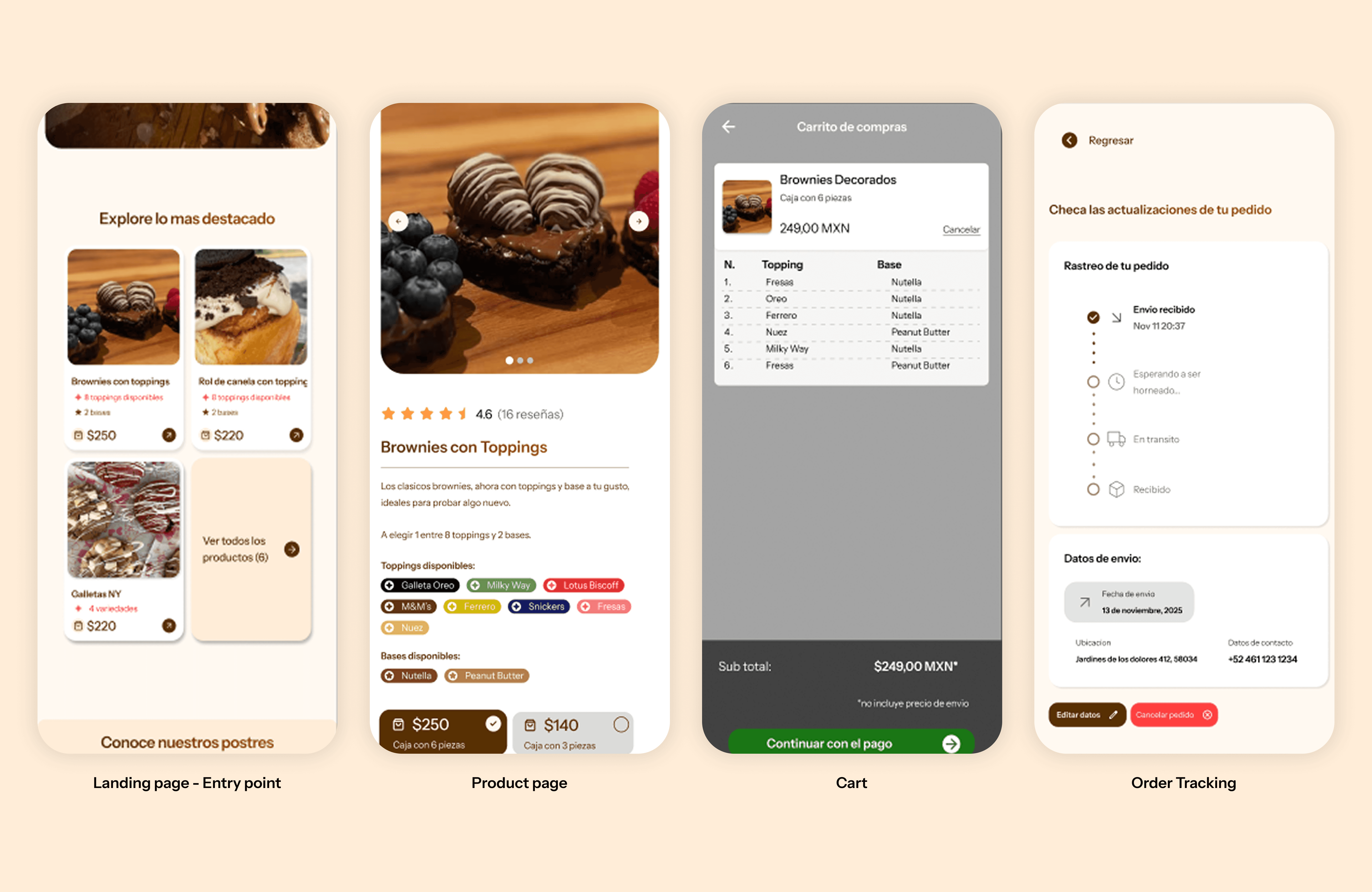
The solution
Ordering flow
The solution focuses on a mobile-first ordering flow that replaces manual messaging with a structured and intuitive experience, reducing errors for customers and improving order management for the business.
Reflection
Users need reassurance throughout the ordering process, especially when placing custom orders without direct communication. Clear summaries and order tracking played a key role in building trust.
This project reinforced the importance of guiding users step by step to reduce cognitive load and prevent missing information, particularly in mobile experiences.
In a future iteration, I would validate the flow through usability testing with real users and explore ways to further personalize the experience without increasing complexity.
Thank you for reading!
Here i leave some of my other works